Abstract
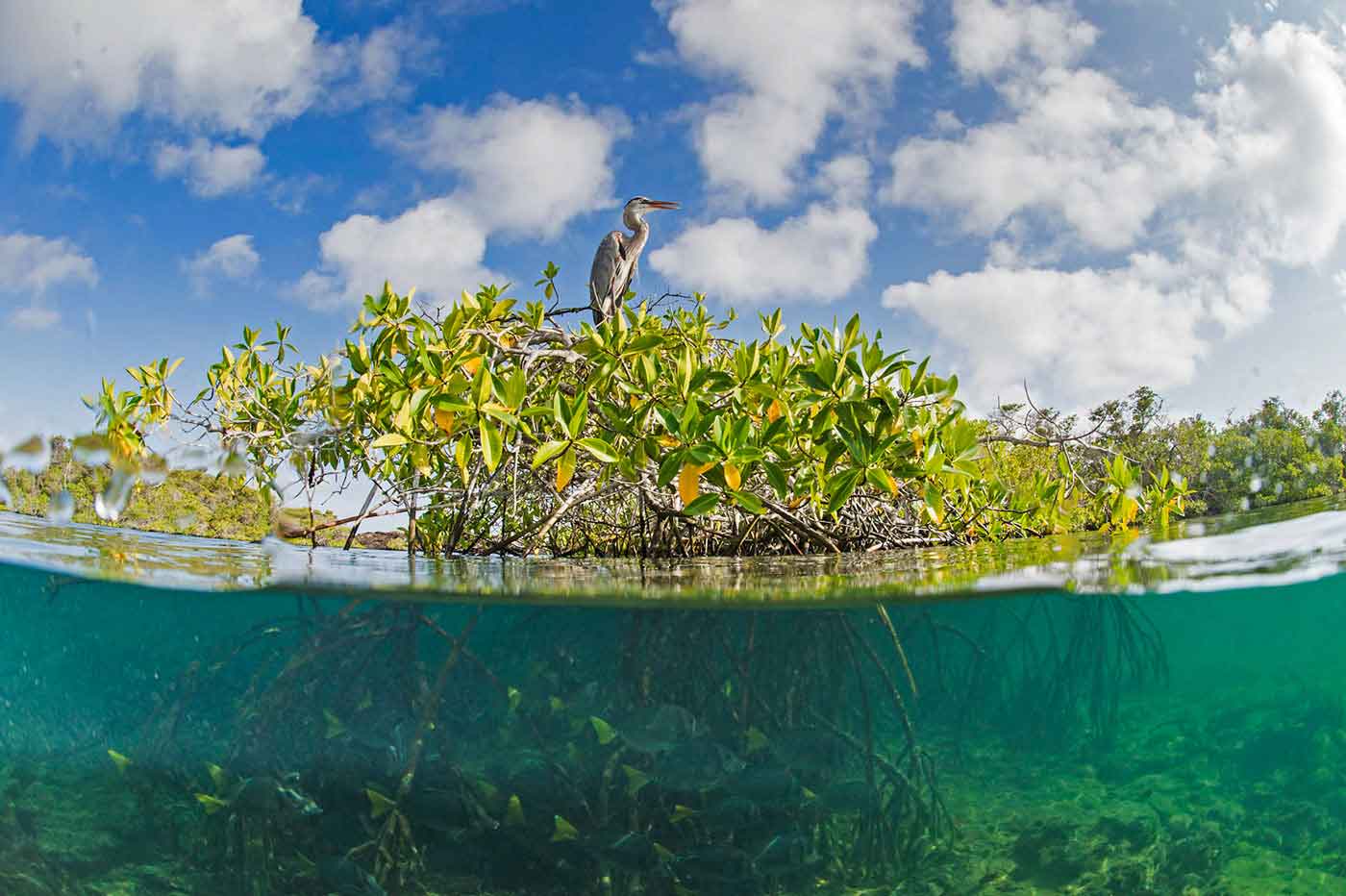
Blue carbon ecosystems (BCEs), including mangrove forests, seagrass meadows and tidal marshes, store carbon and provide co-benefits such as coastal protection and fisheries enhancement. Blue carbon sequestration has therefore been suggested as a natural climate solution. In this Review, we examine the potential for BCEs to act as carbon sinks and the opportunities to protect or restore ecosystems for this function. Globally, BCEs are calculated to store >30,000 Tg C across ~185 million ha, with their conservation potentially avoiding emissions of 304 (141–466) Tg carbon dioxide equivalent (CO2e) per year. Potential BCE restoration has been estimated in the range of 0.2–3.2 million ha for tidal marshes, 8.3–25.4 million ha for seagrasses and 9–13 million ha for mangroves, which could draw down an additional 841 (621–1,064) Tg CO2e per year by 2030, collectively amounting to ~3% of global emissions (based on 2019 and 2020 global annual fossil fuel emissions). Mangrove protection and/or restoration could provide the greatest carbon-related benefits, but better understanding of other BCEs is needed. BCE destruction is unlikely to stop fully, and not all losses can be restored. However, engineering and planning for coastal protection offer opportunities for protection and restoration, especially through valuing co-benefits. BCE prioritization is potentially a cost-effective and scalable natural climate solution, but there are still barriers to overcome before blue carbon project adoption will become widespread.
Key points
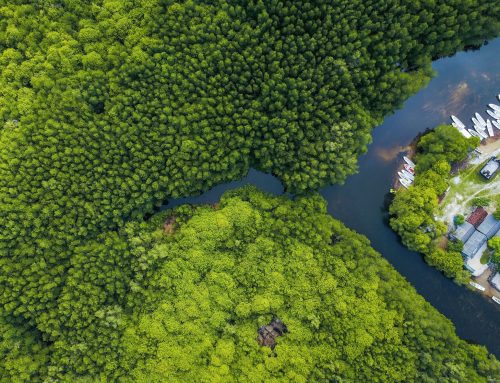
- Blue carbon ecosystems (BCEs), including mangrove forests, tidal marshes and seagrass meadows, are gaining international recognition as a natural climate solution to contribute to climate change mitigation and adaptation targets.
- Global distribution is estimated as ~36–185 million ha of BCEs, potentially storing ~8,970–32,650 Tg C and providing important co-benefits.
- Protecting existing BCE could avoid emissions of 304 (141–466) Tg (95% CI bounds) carbon dioxide equivalent (CO2e) per year and large-scale restoration could remove an extra 841 (621–1,064) Tg CO2e per year by 2030, equivalent to ~3% (0.5–0.8% from protection and 2.3–2.5% from restoration) of annual global greenhouse gas emissions.
- Blue carbon’s potential as a nature-based solution will depend on societal actions; restoring BCE should be a key focus of the UN Decade on Ecosystem Restoration (2021–2030).
- Emerging blue carbon markets should aim to incorporate the value of co-benefits into financial frameworks to assist with the investments required for restoration and conservation.